1 item has been added to your cart.

Applied Health Economics, Second Edition |
||||||||||||||||||||||||||||||||||||
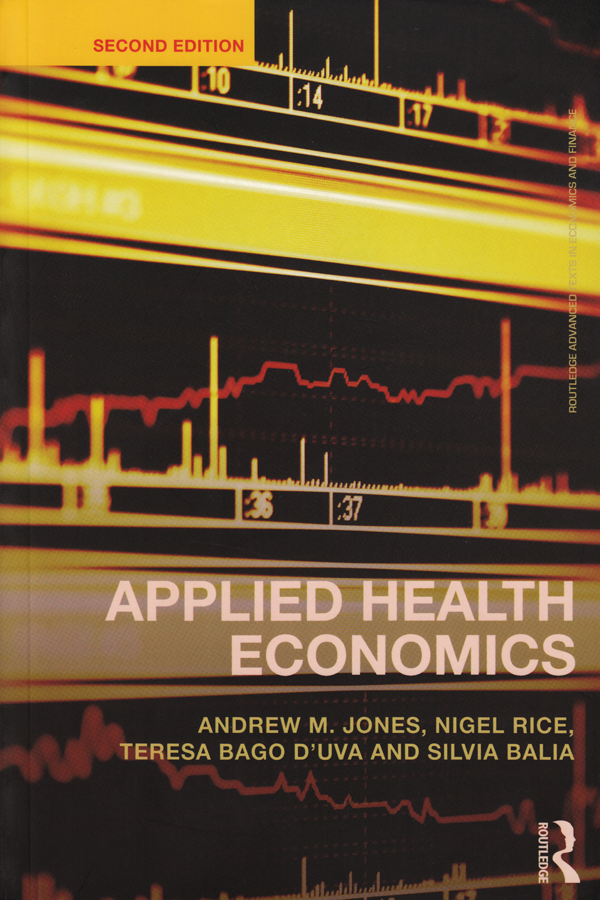 Click to enlarge See the back cover |

As an Amazon Associate, StataCorp earns a small referral credit from
qualifying purchases made from affiliate links on our site.
eBook not available for this title
eBook not available for this title |
|
||||||||||||||||||||||||||||||||||
Comment from the Stata technical groupApplied Health Economics, Second Edition, by Andrew Jones, Nigel Rice, Teresa Bago d’Uva, and Silvia Balia, shows how to summarize and analyze health-economic data with Stata. The authors teach topics in health economics by defining and asking real questions of real data with Stata. The book includes all the Stata code used in the analyses, and the authors carefully interpret the output. Applied Health Economics lives up to its name by teaching thorough application. This book is an excellent choice for anyone interested in empirical health economics. It offers a nice introduction for graduate students and useful discussions and modeling strategies for more advanced researchers. The wealth of Stata examples makes the book an outstanding resource to researchers analyzing health-economic data with Stata. The second edition has been updated throughout to reflect recent enhancements to Stata. The second edition also contains two timely new chapters on describing and modeling health care costs. Applied Health Economics is nicely organized into parts, which correspond to data types, and chapters within each part, which focus on particular topics in health economics. The coverage is thorough, as the table of contents below makes clear. |
||||||||||||||||||||||||||||||||||||
Table of contentsView table of contents >> |
||||||||||||||||||||||||||||||||||||


